News, Insights, and Announcements
Tysons Corner, Virginia – July 25, 2025 – ESGI-Potomac Recruiting is delighted to announce that Megan Norris has joined the firm as Director-Career Services. In this key leadership role, Megan will oversee the development and execution of comprehensive career development strategies designed to support the continued growth and success of our team members.
Megan Norris comes to ESGI Potomac Recruiting with over 25 years of strategic communications expertise. A Certified Professional Résumé Writer, she excels at crafting compelling career narratives for a diverse cadre of accomplished professionals.
Her unique background blends two distinct careers. Megan served 12 years as a Federal Air Marshal, undertaking covert domestic and international missions and contributing in roles such as Public Affairs Officer and Taskings Division specialist. She also built a strong communications résumé prior to her federal service, holding senior roles—including Communications Manager—at the American Red Cross of Greater Chicago, Brookdale Living, and Advocate Illinois Masonic Medical Center. In these positions she oversaw public relations, media training, crisis communications, and executive speech writing.
Following her 2018 retirement from the Federal Air Marshal Service, Megan launched her own firm, Norris Editorial and Writing Services, delivering résumé, bio, and document writing and editing to a diverse clientele. At growth[period], she will focus on developing executive career documentation—including résumés, cover letters, executive biographies—as well as optimizing LinkedIn profiles to ensure her clients present themselves powerfully across all career platforms.
Megan has a proven ability to translate complex experience into compelling narratives. In May 2024, she received First Place in the Federal Résumé Category of the PARWCC Elite Circle Résumé Contest. She also presented at the 2024 Women in Federal Law Enforcement (WIFLE) Annual Leadership Conference in Washington, D.C., on “Creating Effective Job Application Documents for Female Law Enforcement and Civilian Career Advancement,” and is a regular contributor to WIFLE’s Quarterly Newsletter.
She holds a Master of Science in Integrated Marketing Communications from Roosevelt University in Chicago and a Bachelor of Arts in English/Journalism with a minor in Political Analysis from Miami University (Oxford, Ohio).
“I’m excited to join ESGI Potomac Recruiting and support senior leaders in shaping their professional narratives,” said Megan Norris. “Helping clients articulate their career stories, to align with their ambitions, while standing out in competitive environments is incredibly rewarding work.”
Megan’s approach centers on thorough comprehension, strategic storytelling, and meticulous attention to detail—ensuring clients confidently present their credentials, align with industry expectations, and successfully navigate career transitions.
ESGI-Potomac Recruiting is a premier retainer based executive search firm specializing in recruiting top-tier executive and professional talent across various industries. With a commitment to excellence and a deep understanding of client needs, ESGI-Potomac Recruiting delivers tailored solutions that drive organizational success. For more information about ESGI-Potomac Recruiting and its services, please visitwww.executivesearchgroupinc.com
CONTACT
Talia Frey
703.894.2121
 May 2022-- growth[period] is proud to announce that we have been selected as a 2022 Best Place to Work in Greater Washington in the small business category by the Washington Business Journal. This is the sixth time that growth[period] has placed on the Best Places to Work List.
Every year the Washington Business Journal honors 85 companies as the ‘Best Places to Work’ in the D.C. area. Winners received this distinction by scoring the highest among hundreds of employers that participated in an annual employee engagement survey. growth[period] ranked 5th out of 20 companies awarded in the small business category. Honorees are featured in the May 13 issue of the Washington Business Journal. Find the complete list of companies here.

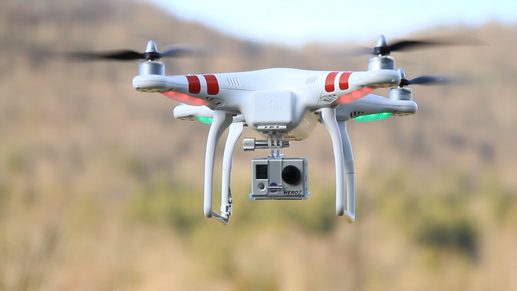
DJI Phantom-1 sUAS
The Federal Aviation Administration (FAA) is looking to overhaul laws pertaining to the use of small unmanned aerial systems (sUAS), classified as aircraft weighing less than 55 pounds, within the next year. The released Notice of Proposed Rulemaking (NPRM) stipulates measures relating to the operation of non-recreational sUAS in terms of height restrictions, aircraft registration, daytime flight restrictions, operator certification, and line of sight restrictions. The NPRM first step in what is likely to be a yearlong process before enforcement of new regulations begins. The White House Office of Information and Regulatory Affairs, within the Office of Management and Budget (OBM), is conducting a ninety day review of the sUAS NPRM (Colborn, 2015). The OMB has indicated both the FAA and sUAS community lack adequate safety data.
The sUAS which crashed in White House grounds in early February was a contributing factor in the recent push for UAS reform. The current legal restriction on US operated sUAS has enabled foreign companies to gain an advantage in the commercial UAS market:
“Sky-Futures, a British company that dominates the use of drones to collect and analyze inspection data for oil and gas companies, says its business soared 700 percent last year as the normally conservative energy industry embraced the new technology. Co-founder and operations director Chris Blackford said the company is coupling drones with software and a better understanding of what works in the field, giving Sky-Futures ‘a head-start over the U.S because we understand pretty intimately the problems facing the oil and gas market, and how we can solve them with technology.’ Looser regulations outside the U.S. have created pockets of innovation attracting ideas, money and momentum, says Patrick Thevoz, co-founder and CEO of Swiss-based Flyability” - Jeremy Wagstaff, 2015
The international commercial UAS market is valued at $100 billion over the next decade, due to increased UAS applications in the forestry, oil and gas, law enforcement, and agricultural industries. Though military purchases are still dominant, though commercial unmanned aerial vehicle (UAV) spending currently accounts for roughly 12% of the global UAV market and is expected to rise to approximately $82.1 billion between 2015 and 2025 (Ballve, 2014). The FAA has estimated that, if regulations are changed, 7,500 commercial sUAVs could be flying in the US before the end of the decade.
In the global military UAV market, US firms have been losing their market share in recent years to Israeli, European, and Chinese firms due, to strict export controls. To help combat this, the Department of State recently announced it will expedite its review process of foreign military sales with respect to 300 km range 500 kg payload class UAVs—otherwise known as Medium-Altitude Long-Endurance (MALE) UAVs.
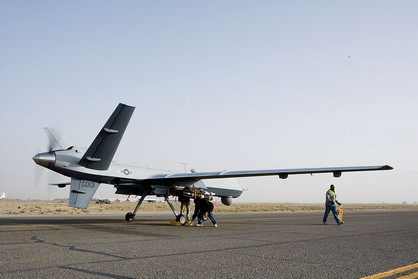
General Atomics MQ-9 "Reaper"
Under the 1987 Missile Technology Control Regime (which affects the sale of UAVs), the United States has historically sold few optionally armed UAVs, even among close allies. For example, MQ-9 “Reaper” sales have been limited to the UK, France, Italy, the Netherlands, and recently Spain. With the rise of the Islamic State of Iraq and the Levant, many Gulf allies are requesting additional American arms exports, such as the “Predator” XP. The Department of State has insisted the expedited review process will still adhere to the Missile Technology Control Regime guidelines. Under the foreign military sales program, any potential American UAV customers must:
- Act in accordance of international law, including humanitarian provisions
- Use armed UAVs only under a lawful basis e.g. self defense
- The nation will abstain from using UAVs for domestic surveillance purposes
- UAVs will employ procedures to limit collateral damage
Peter Lichtenbaum and Rachel Stohl argue the new aforementioned restrictions will lead to greater difficulties in exporting American MALE UAVs, despite the Department of State pledge to keep its review process to one year or less. If the US Government continues to inhibit the export of optionally armed American UAVs or similar products, states combating terrorism will find alternate suppliers. For example, the US Government recently barred the sale of additional Cobra helicopter gunships to Nigeria amid human rights concerns; Nigeria subsequently acquired Chinese CH-3 UAVs which it has deployed against Boko Haram militants.
Sources
- Small Unmanned Aerial Systems: What Will the FAA Do? , Mark Colborn , 2015.
http://www.aviationtoday.com/the-checklist/Small-Unmanned-Aerial-Systems-What-Will-the-FAA-Do&thinsp_84243.html - Drone policy improving — but we have a ways to go,
http://m.bizjournals.com/washington/blog/fedbiz_daily/2015/02/drone-policy-improving-but-we-have-a-ways-to-go.html?ana=e_wash_fedbiz&s=newsletter&ed=2015-02-26&u=P7IjntEqPC33GGhyR+ixPA0c3d4c12&t=1424990006&r=full - Game of drones: As U.S. dithers, rivals get a head start, Jeremy Wagstaff, 2015.
http://www.reuters.com/article/2015/03/08/us-tech-drones-idUSKBN0M40VM20150308 - Obama To Sell Armed Drones To More Countries, Patrick Tucker Marcus Weisgerber, 2015.
http://www.defenseone.com/technology/2015/02/obama-sell-armed-drones-more-countries/105495/ - What Obama’s Drone Export Policy Really Means, Peter Lichtenbaum and Rachel Stohl, 2015.
http://breakingdefense.com/2015/02/what-obamas-drone-export-policy-really-means - Obama administration to allow sales of armed drones to allies, Missy Ryan , 2015.
http://www.washingtonpost.com/world/national-security/us-cracks-open-door-to-the-export-of-armed-drones-to-allied-nations/2015/02/17/c5595988-b6b2-11e4-9423-f3d0a1ec335c_story.html - Rep. Hunter to Obama: Send Jordan the Predator XP, Joe Gould , 2015.
http://www.defensenews.com/story/defense/policy-budget/congress/2015/02/05/hunter-to-obama-send-jordan-the-predator-xp/22934783/ - TECH More: Mobile Internet of Things Drones BI Intelligence COMMERCIAL DRONES: Assessing The Potential For A New Drone-Powered Economy, Marcelo Ballve, 2015.
http://www.businessinsider.com/the-market-for-commercial-drones-2014-2
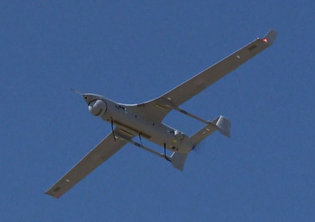
RQ-21A Blackjack. Image Credit: US Navy
To combat the wide range of threats to American interests, Votel called for increased Intelligence Surveillance and Reconnaissance (ISR) capabilities from additional UAVs. SOCOM already operates a wide assortment of UAVs, including the RQ-21A Blackjack, RQ-7 Shadow, Viking 400, MQ-1 Predator, and MQ-9 Reaper (Hoffman & Schechter, 2013). Votel indicated that SOCOM would continue to invest in UAV technology, and would work with industry on future projects (Magnuson, 2015). Michael Dumont, Principal Deputy Assistant Secretary of Defense for Special Operations/Low-Intensity Conflict, also stressed SOCOM’s growing interest in incorporating COTS technology as a means to maintain a technologically superior force: “Many of our adversaries have acquired, developed and even stolen technologies that have put them on somewhat equal footing with the West in a range of areas…Recognizing this future direction requires understanding the current reality: The US government no longer has the leading edge developing its own leading-edge capabilities, particularly in information technology” Dumont also discussed broader DoD wide measures to ensure the Military’s technological superiority, such as Deputy Secretary of Defense Bob Work’s “Third Offset Strategy” and Under Secretary of Defense for Acquisition, Technology and Logistics Frank Kendall’s “Better Buying Power 3.0”. This new technological offset strategy, in tandem with Better Buying Power 3.0, is meant to secure the technological edge of US forces under a constrained fiscal environment. Both Votel and Dumont also discussed the difficulties of maintaining a high level of operational readiness under sequestration. However, even in the midst of sequestration, SOCOM’s budget has been relatively stable when compared to other portions of the DoD’s budget. Marcus Weisgerber recently examined SOCOM’s FY 2015 budget, which accounted for 1.8% of the DoD’s base and overseas contingency operations (OCO) budget, at $10 billion. The figure does not include the personnel costs of the 70,000 operators under SOCOM or major equipment and weapon procurements which are covered under the budgets of the individual armed services.Sources
- Peeling the Onion Back on the Pentagon’s Special Operations Budget , Marcus Weisgerber, 2015. http://www.defenseone.com/management/2015/01/peeling-onion-back-pentagons-special-operations-budget/103905/?oref=d-river
- SOCOM's Gen. Votel Sees Tensions in Arctic, ISIL Expansion as Future Threats, Stew Magnuson, 2015. http://www.nationaldefensemagazine.org/blog/Lists/Posts/Post.aspx?ID=1722
- Special Ops Commander Discusses Challenges, Priorities, Jim Garamone, 2015. http://www.defense.gov/news/newsarticle.aspx?id=128047
- Special Operations Eyes Present, Future Threats, Jim Garamone, 2015. http://www.defense.gov/news/newsarticle.aspx?id=128054
- The text of General Flynn’s speech, Thomas E. Ricks, 2015. https://foreignpolicy.com/2015/01/27/the-text-of-general-flynns-speech/
- SO/LIC Agenda, NDIA, 2015. http://www.ndia.org/meetings/5880/Documents/Agenda.pdf
- Spec Ops Leaders Want Off-the-Shelf Gear Fast, Paul McLeary, 2015. http://www.defensenews.com/story/defense/show-daily/solic/2015/01/27/specops-special-operations-technology-jihadists/22425981/
- SOCOM seeks runway-independent UAV, Erik Schechter, 2013. http://www.flightglobal.com/news/articles/socom-seeks-runway-independent-uav-394362/
- Up to $250M from US SOCOM for L-3’s Viking UAVs, Defense Industry Daily, 2009. http://www.defenseindustrydaily.com/Up-to-250M-from-SOCOM-for-L-3s-Viking-UAVs-05803/
- SOCOM Wants to Deploy MQ-9 Drones to Remote Areas, Michael Hoffman, 2013. http://www.military.com/daily-news/2013/09/16/socom-wants-to-deploy-mq9-drones-to-remote-areas.html